Introduction
Practically all modern computers, from the cheap microcontroller in your dishwasher to high-tech hardware crunching numbers for artificial intelligence systems, rely on versions of the same technology: slabs of silicon patterned with microscopic structures called transistors. Electronic circuits containing transistors can rapidly and reliably toggle between two states, usually labeled “0” and “1.” That enables them to store and manipulate bits, the basic units of information.
Quantum computers have the potential to process information in new and more powerful ways beyond mere 1s and 0s, and to solve certain problems that are too hard for their ordinary “classical” cousins. But building a machine powerful enough to fulfill that promise remains a formidable challenge. Quantum computing hasn’t yet had its transistor moment, and researchers are still exploring many different approaches to developing quantum hardware.
Current approaches differ first and foremost in which physical systems they use as qubits, the elementary building blocks of quantum computers. Unlike circuits that store classical bits, qubits can exhibit strange phenomena like superposition and entanglement that give them extra computational power. But these quantum effects are also very fragile, easily disrupted by stray interactions between qubits and the surrounding environment. Each proposed qubit technology tries to reconcile two properties that are hard to achieve simultaneously: Qubits must be isolated from outside disturbances, but easy for researchers to manipulate.
Some researchers have placed their bets on natural quantum systems such as atoms. To use a single atom as a qubit, you must first isolate and trap it in a vacuum chamber, and researchers have pursued two distinct approaches to doing so. In trapped-ion quantum computing, researchers knock one electron off each atom to get positively charged ions that can be held in place by electric fields. The other approach uses arrays of tightly focused laser beams, called optical tweezers, to trap neutral atoms.
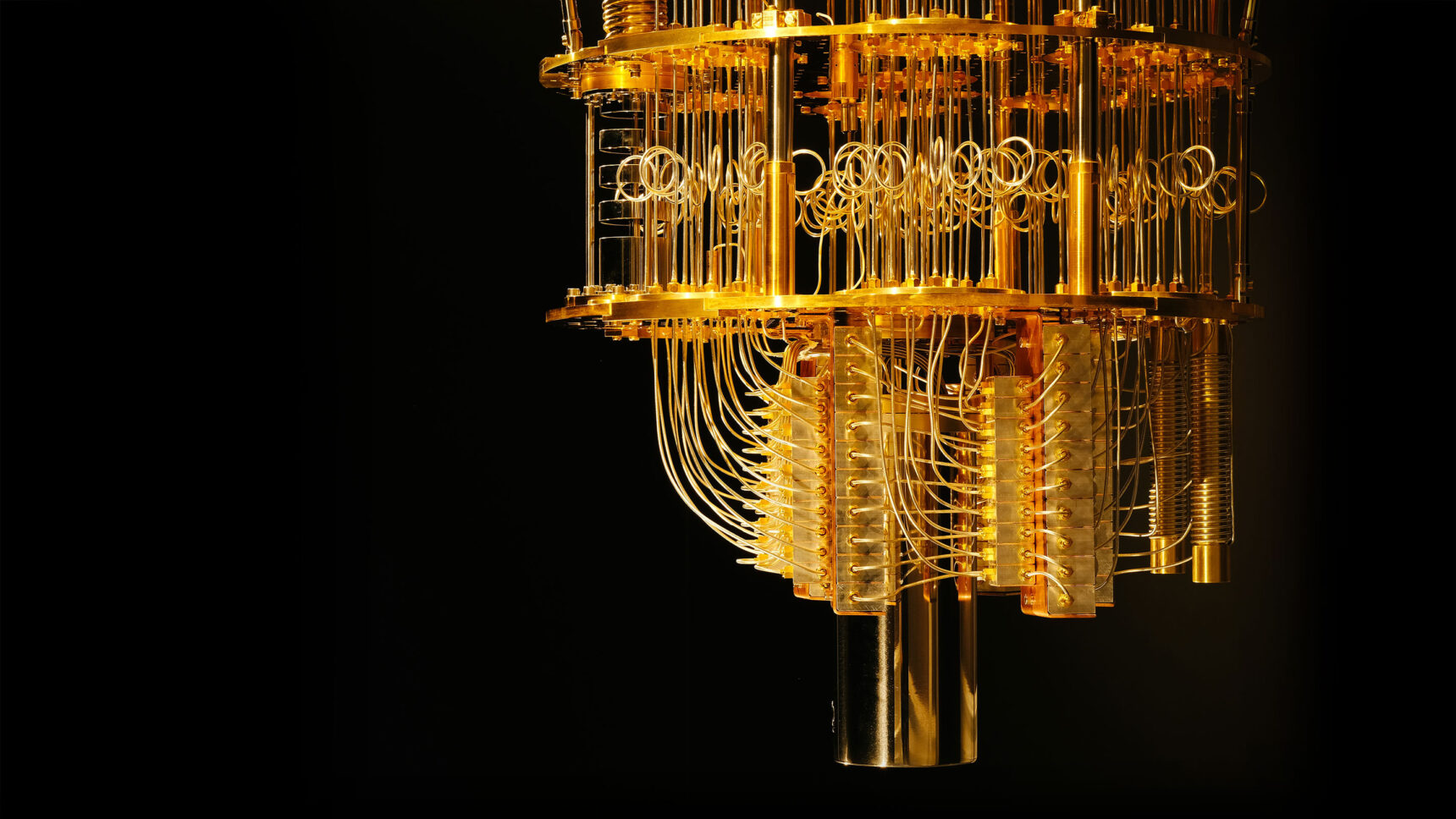
Other researchers are pursuing an alternative approach, called superconducting quantum computing, which involves the design of artificial qubits. Using modified versions of microfabrication processes developed for classical computing, researchers assemble tiny circuits made of metals like aluminum and niobium that become superconductors when cooled to very low temperatures. Housed in special cryogenic systems called dilution refrigerators, these superconducting circuits can act like qubits. Many other qubit candidates have been explored, from electron spins to photons to more exotic quantum systems.
Scaling up from small prototypes to much larger systems is one of the biggest challenges facing all these approaches. It’s not enough to make a few good qubits: Researchers will ultimately need at least tens of thousands, by even the most optimistic estimates, and perhaps even millions. More qubits also mean larger and more complex control and measurement systems. While it’s too early to say which technology, if any, will win out, the following images offer a glimpse inside the ambitious efforts required to build reliable quantum computers.
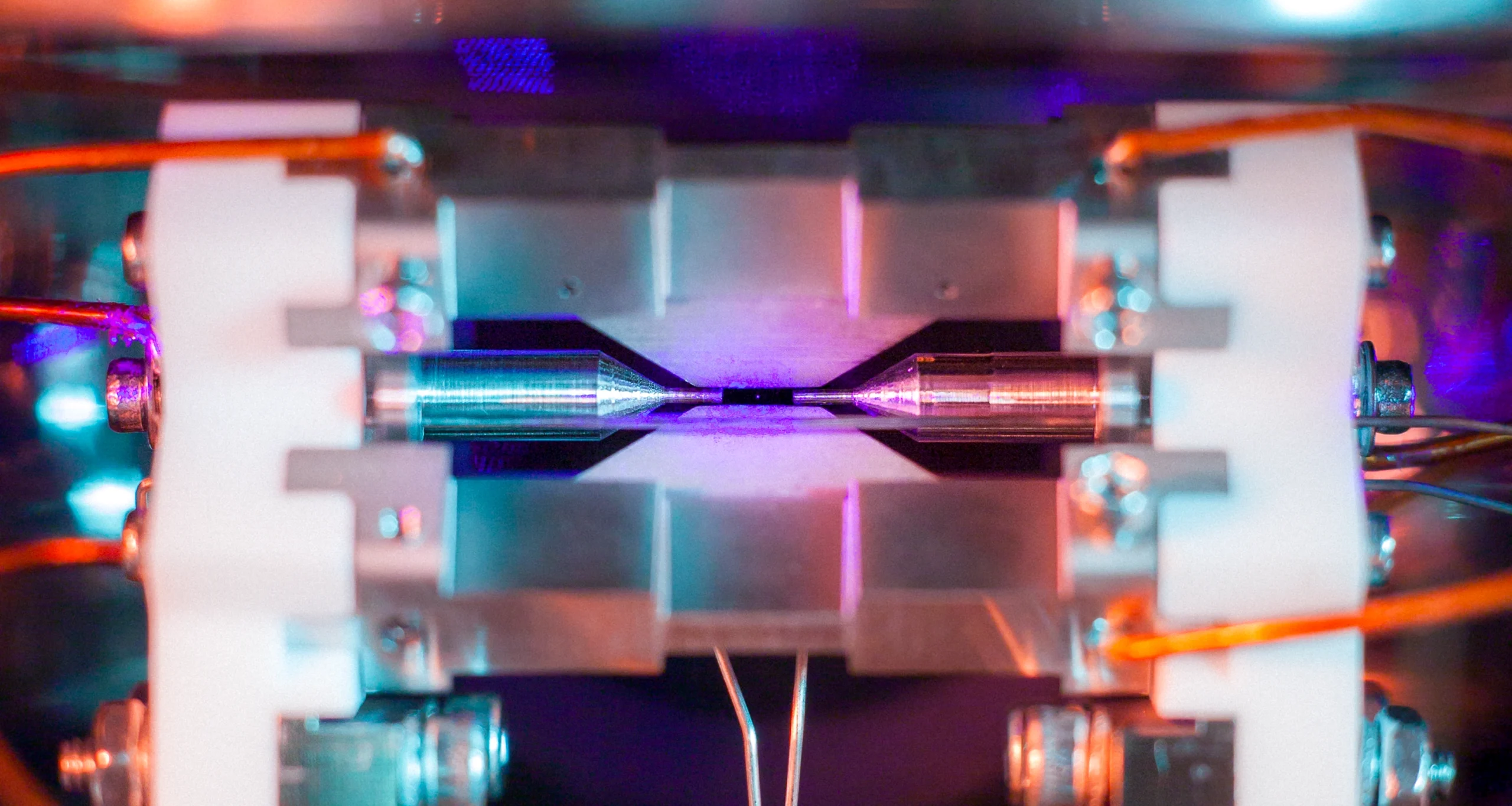
This striking 2017 photograph, taken in a trapped-ion quantum computing lab at the University of Oxford, shows a single strontium ion suspended in a vacuum chamber. Electric fields generated by needle- and blade-shaped steel electrodes confine the ion to the center of a 2-millimeter region between needle tips. The ion is visible because it’s continuously absorbing photons from a laser beam and emitting photons to shed the excess energy. Relatively bulky “blade traps” like this one are often used in academic labs to test new quantum computing techniques on a few qubits.
David Nadlinger/University of Oxford
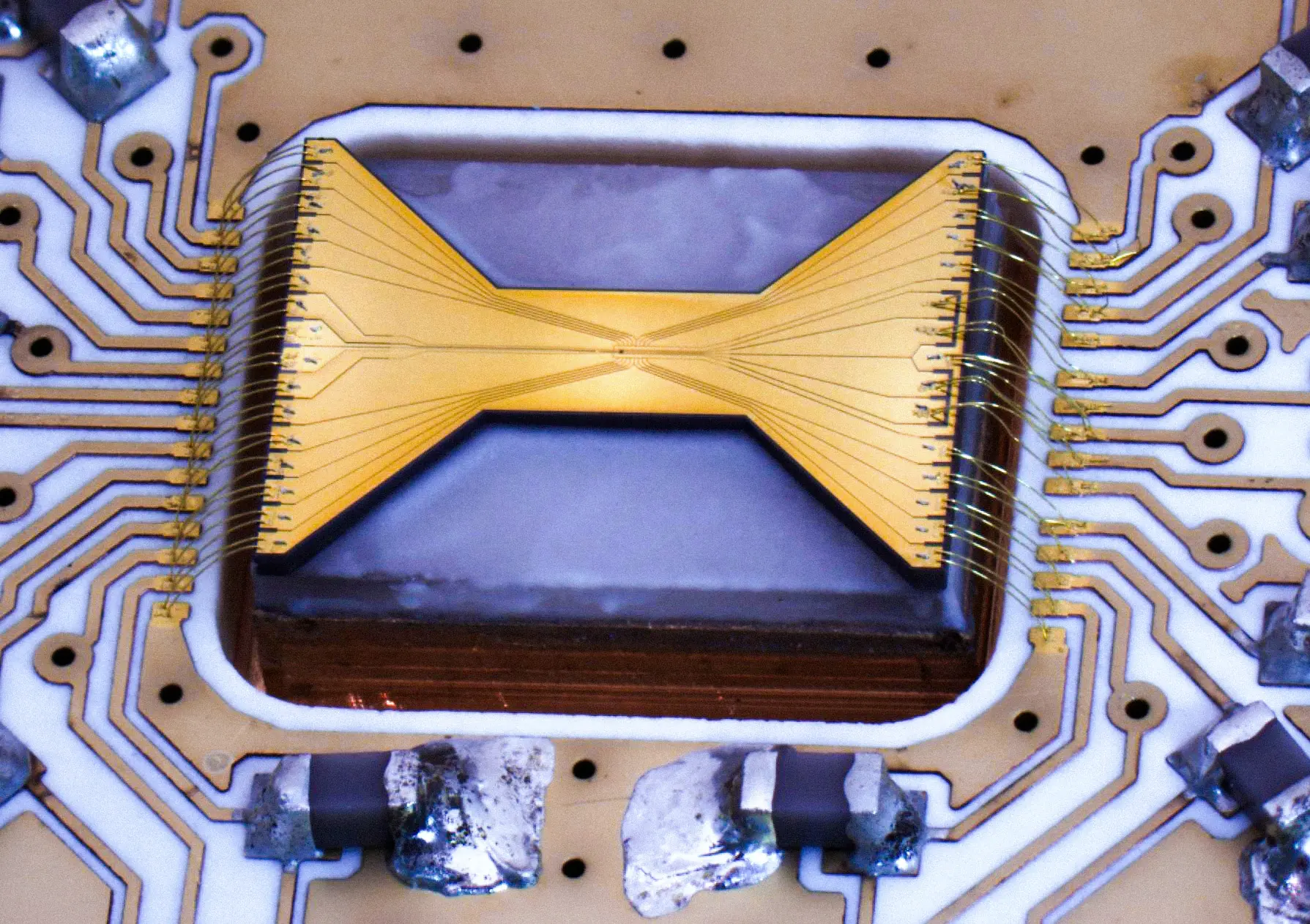
To scale up trapped-ion quantum computers, researchers will need to use more compact “surface traps,” in which the ions are levitated above a chip by electric fields generated by thin gold electrodes on the chip surface. This surface trap, the subject of a 2021 paper by researchers at the National Institute of Standards and Technology in Boulder, Colorado, features an integrated photon detector (tiny solid black dot in center of chip) used to measure the state of beryllium ions that serve as qubits.
D. Slichter/NIST
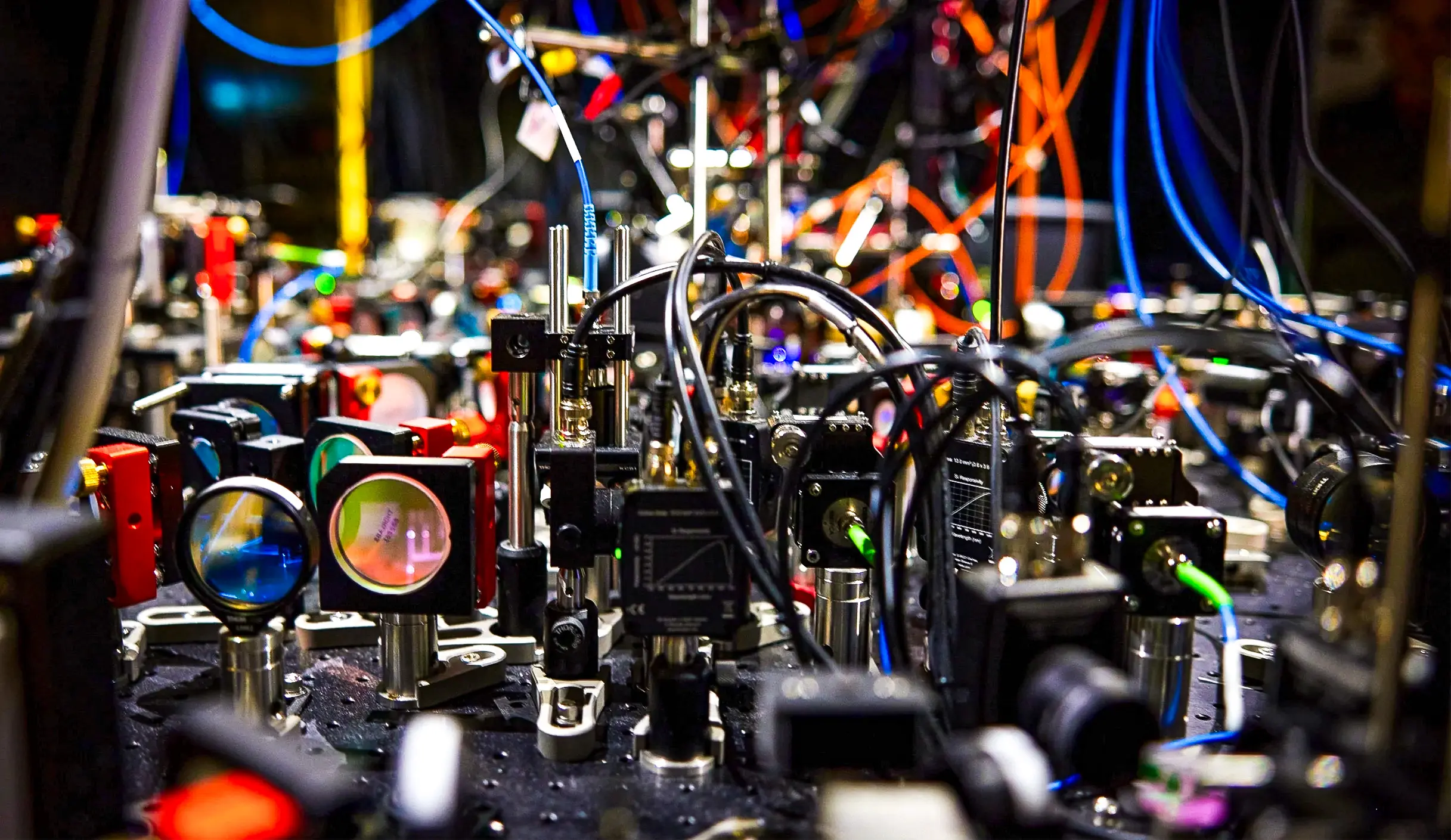
Operating a neutral-atom quantum computer requires many different laser systems for moving, trapping, measuring, and manipulating the atoms that serve as qubits. This photograph of an optical table in a Harvard University neutral-atom lab shows a few of the mirrors, lenses, optical fibers, and detectors used along with other components to route, split, and stabilize the laser beams.
Ken Richardson
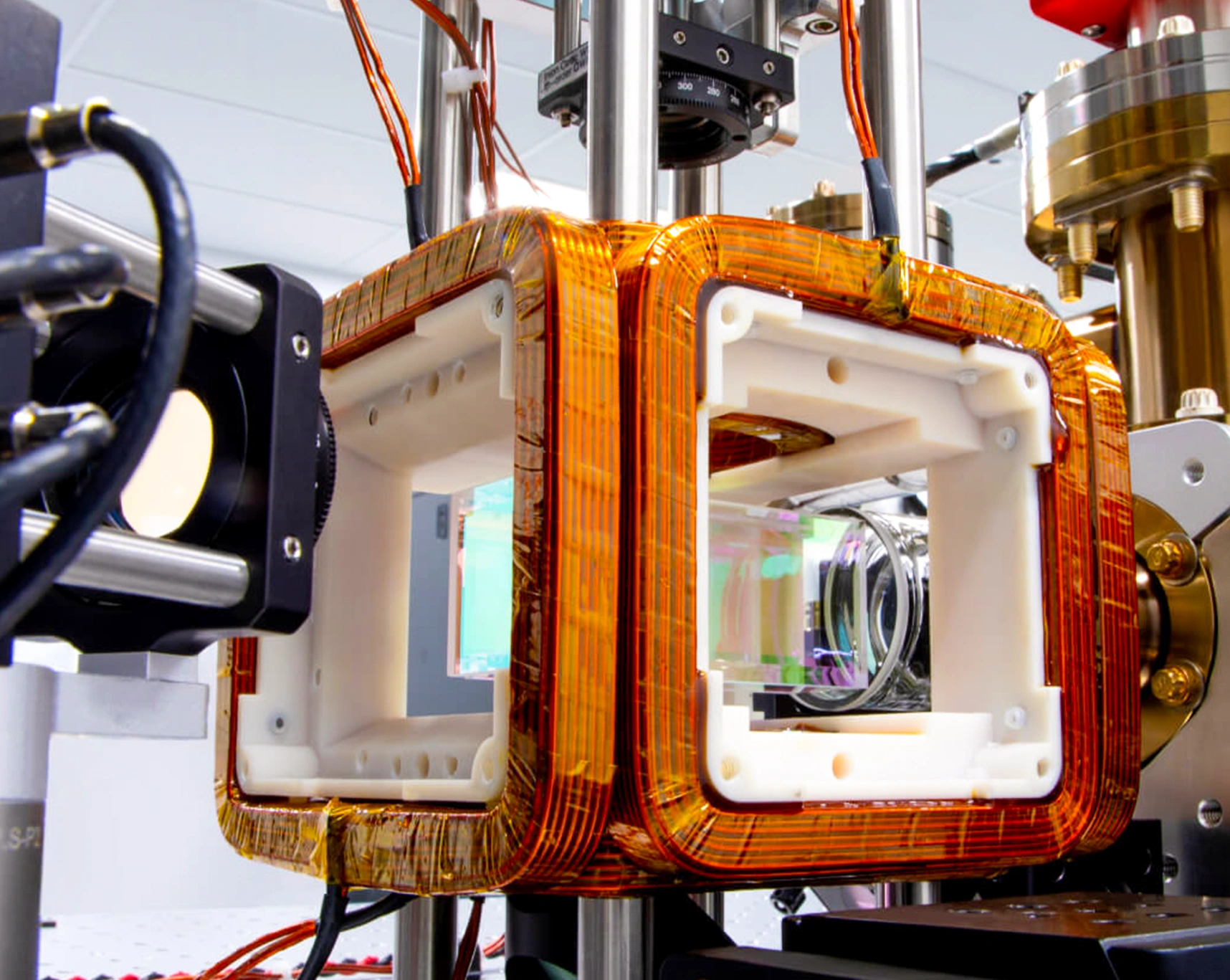
The heart of a neutral-atom quantum computer is the glass vacuum cell in which atoms are trapped in optical tweezer arrays. This vacuum cell, from the quantum computing start-up QuEra, is surrounded by coiled wires that enable researchers to precisely control the magnetic field in the trap region. Also visible are components used to focus laser beams into the cell.
QuEra Computing
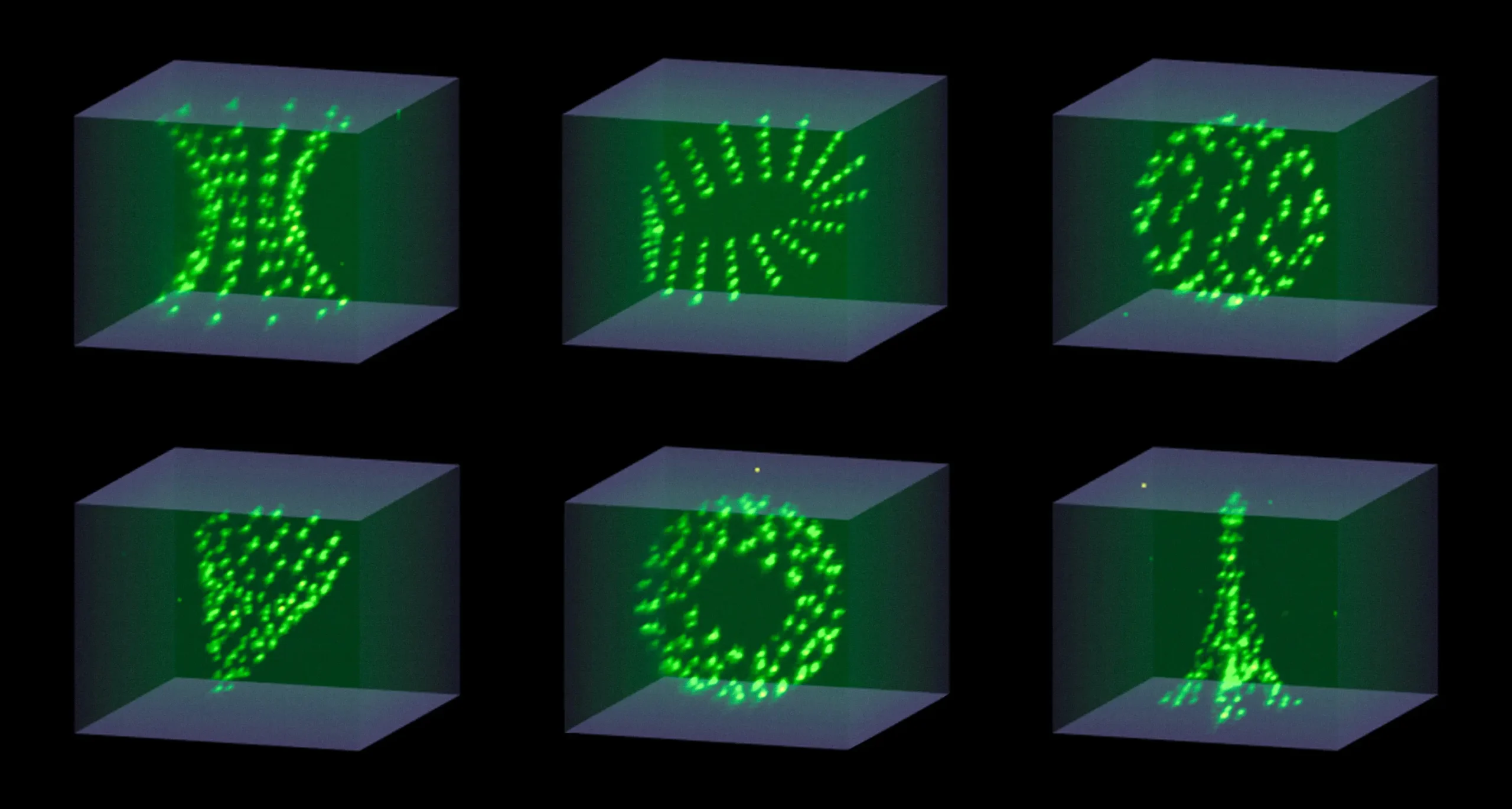
With the optical tweezer arrays used in neutral-atom quantum computing, it’s easy to rearrange atoms to bring any pair of qubits into contact. In a 2018 paper, researchers at Paris-Saclay University showed off this capability by arranging atoms in many striking three-dimensional shapes, including one modeled after the Eiffel Tower.
Thierry Lahaye/CNRS
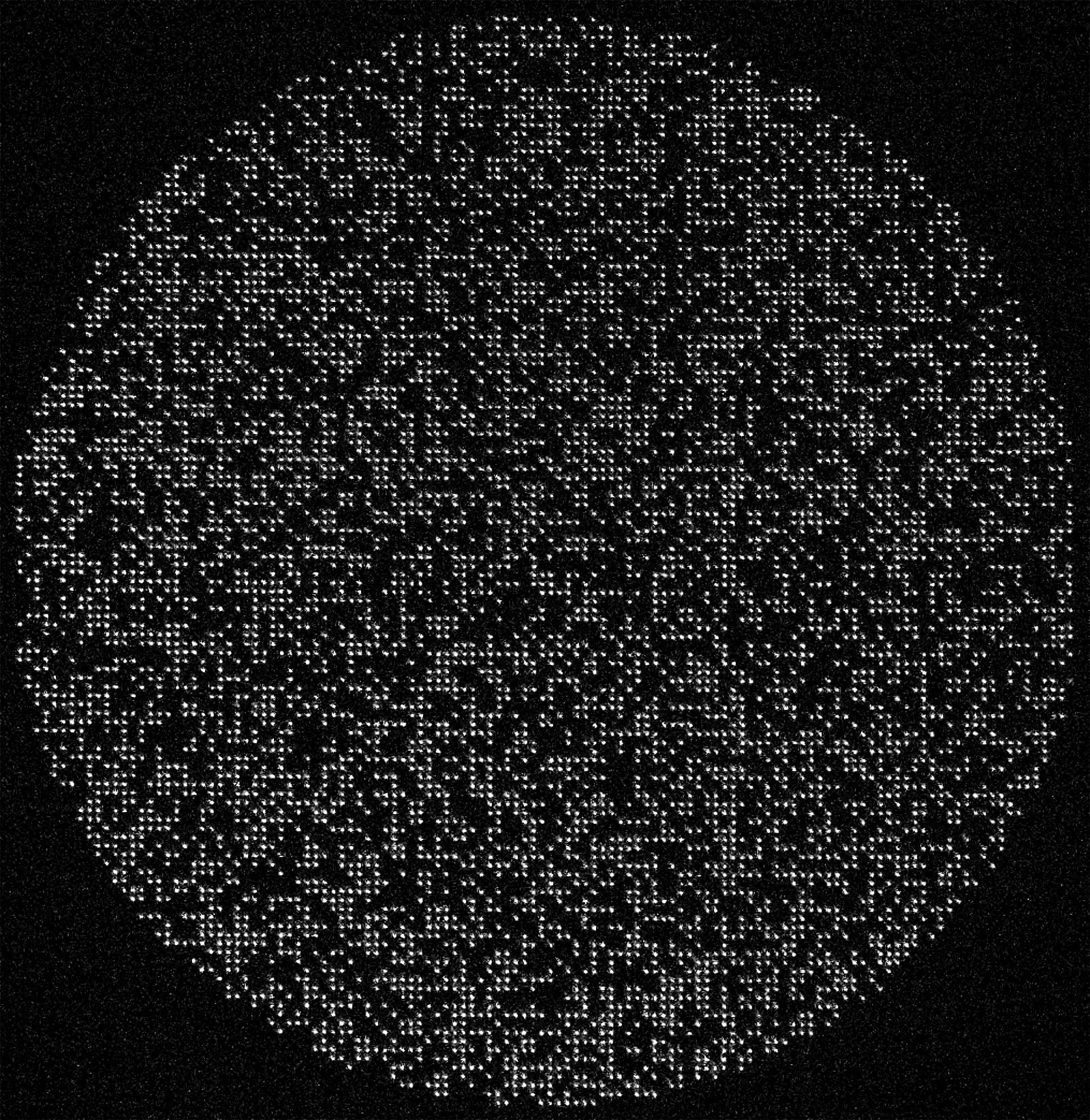
In a paper published in 2025, a team of researchers at the California Institute of Technology trapped a record 6,100 individually controlled cesium atoms in an optical tweezer array 1 millimeter in diameter. They showed that the qubits encoded in these atoms had long coherence times, a prerequisite for quantum computing. But they didn’t do any computations — the record for the largest number of qubits used to run a quantum algorithm remains far lower.
Caltech/Endres Lab
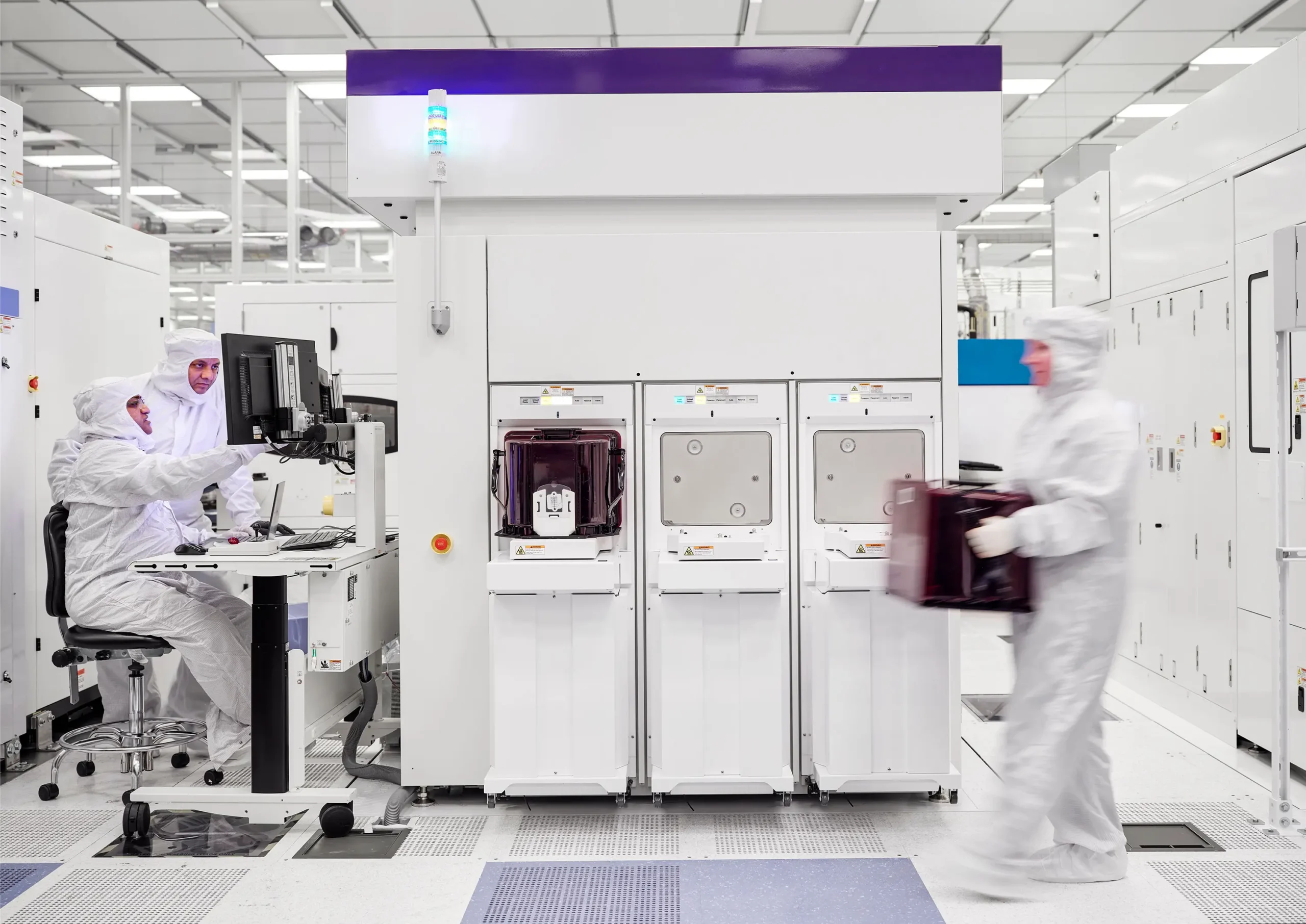
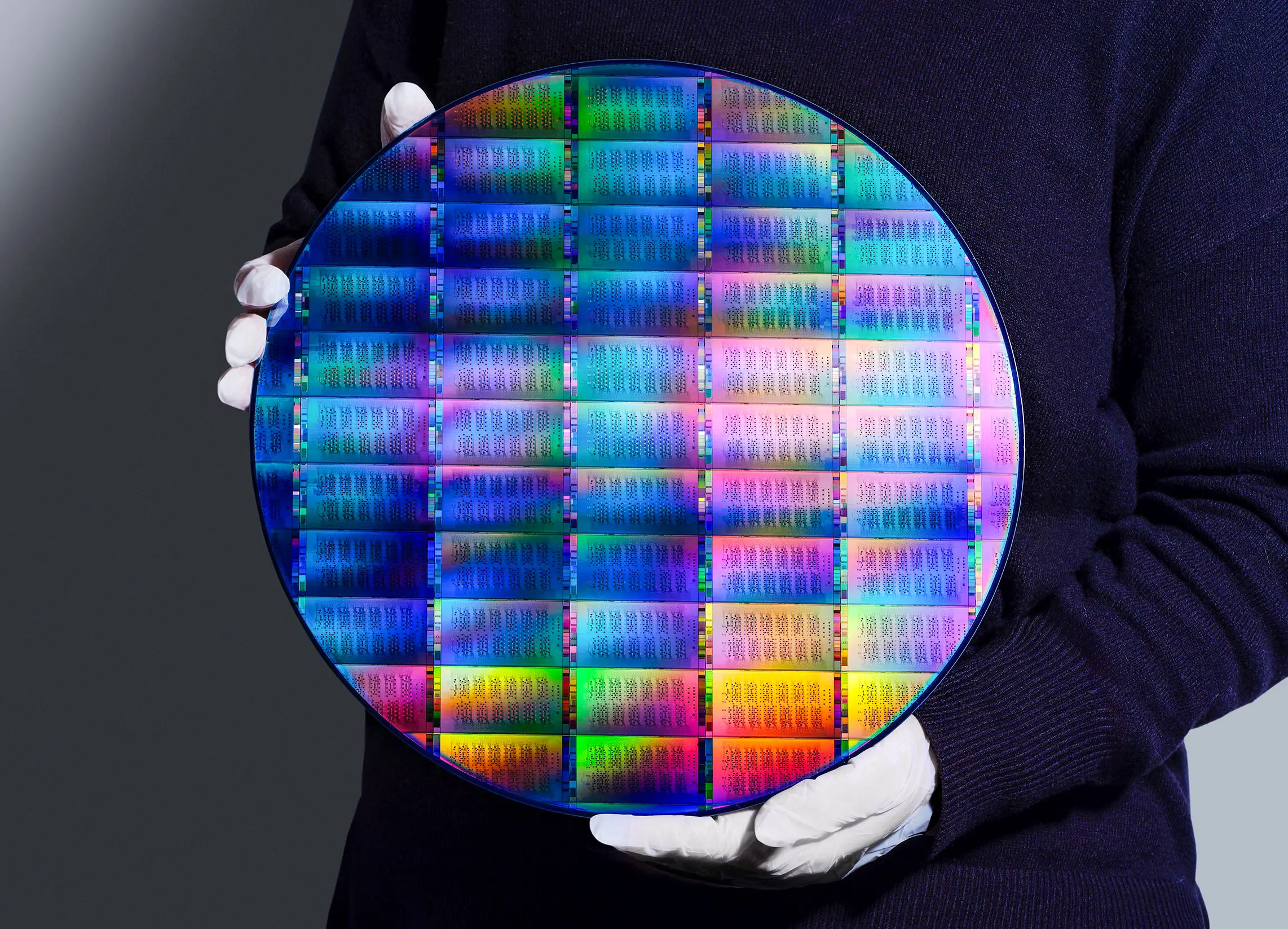
The recipe for crafting superconducting qubits borrows much from the process for making classical computer chips. Thin strips of metal and other materials are layered on pristine silicon disks to make the qubits, and the disks are then diced into separate chips. This chip fabrication process takes place in a clean room, like this one in Albany, New York (top), to prevent contamination from dust and other particulates. The chips (bottom) were produced from an IBM design code-named Nighthawk. Each chip hosts 120 qubits along with other superconducting circuits for controlling interactions between them.
The recipe for crafting superconducting qubits borrows much from the process for making classical computer chips. Thin strips of metal and other materials are layered on pristine silicon disks to make the qubits, and the disks are then diced into separate chips. This chip fabrication process takes place in a clean room, like this one in Albany, New York (left), to prevent contamination from dust and other particulates. The chips shown here (right) were produced from an IBM design code-named Nighthawk. Each chip hosts 120 qubits along with other superconducting circuits for controlling interactions between them.
IBM
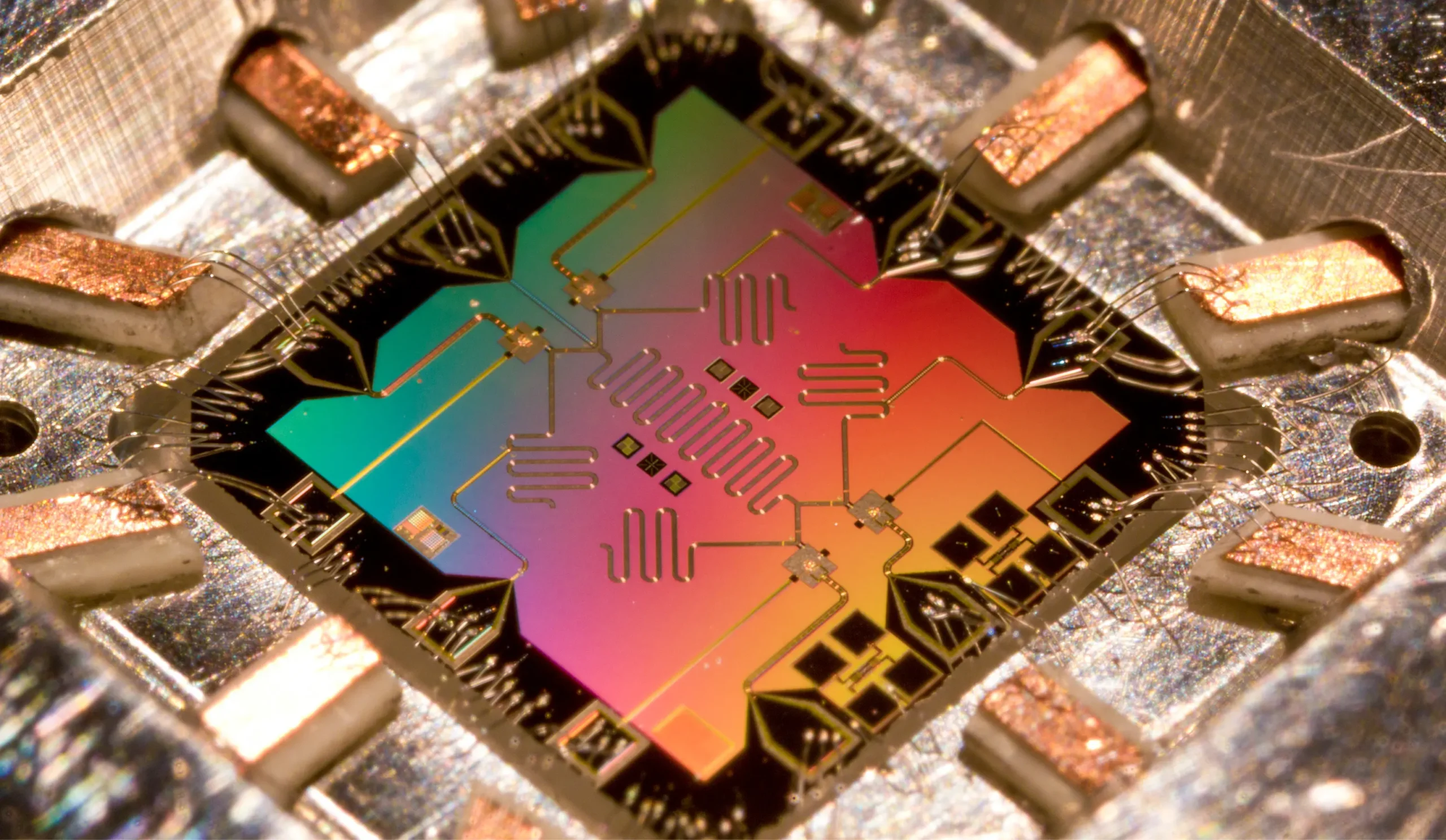
This chip from the early 2010s, designed by researchers at the University of California, Santa Barbara, provides an illustration of superconducting qubit design. It measures 6 millimeters on each side and hosts four superconducting qubits (gold-colored squares in middle of green and yellow regions). Each qubit is paired with a meandering superconducting strip, called a resonator, that serves as memory for storing quantum information. Qubits interact with each other through the longer zigzagging resonator in the center of the chip. External connections deliver microwave pulses for control and measurement.
Erik Lucero
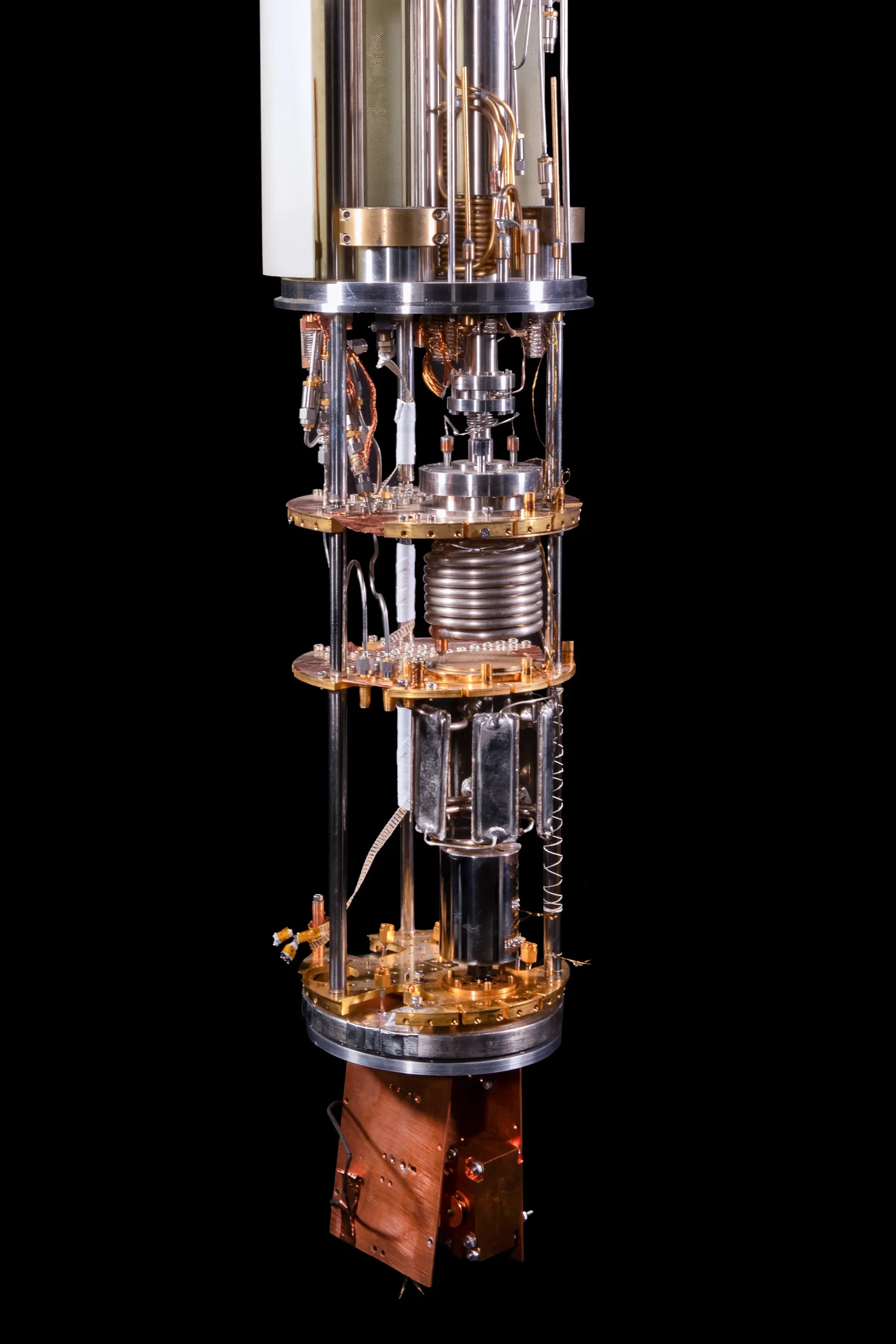
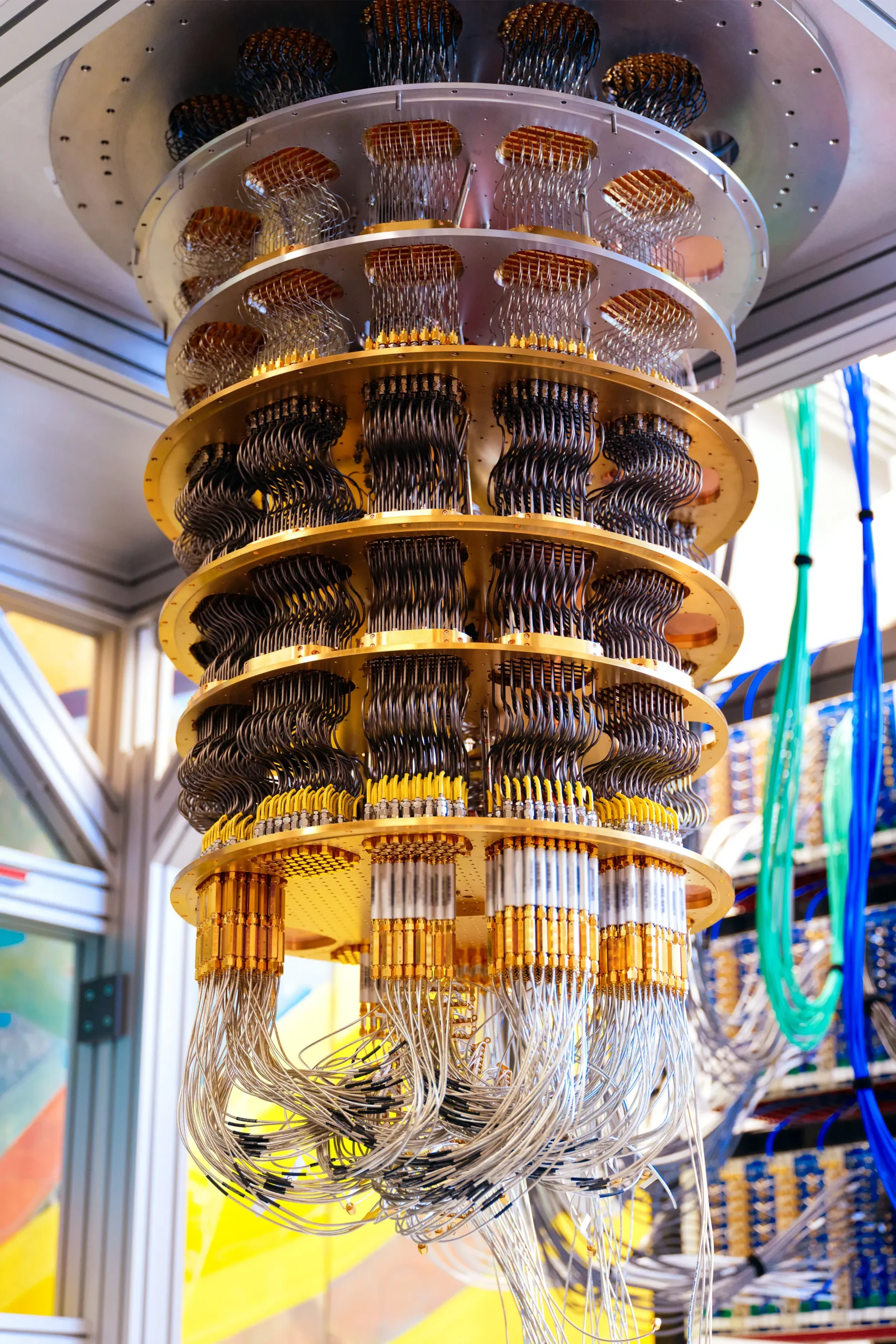
Chandelier-like dilution refrigerators are perhaps the most striking examples of quantum computing infrastructure. On top is “Badger,” used in an influential 2009 demonstration of simple quantum algorithms on two superconducting qubits by Yale University researchers. A plumbing system along its right side circulates a helium isotope mixture for cooling. During operation, a chip hosting the qubits would be anchored to the copper box below the lowest plate, and the system would be enclosed in nested cylindrical shields to block thermal radiation and provide vacuum insulation. On the bottom, a more modern dilution refrigerator from Google Quantum AI shows one of the engineering challenges involved in scaling up superconducting qubit systems. Many cables, with S-shaped bends to relieve strain from thermal contraction during cooling, are needed to control individual qubits and tune their interactions. Quantum computing technology is advancing rapidly, but there’s still a long way to go.
Chandelier-like dilution refrigerators are perhaps the most striking examples of quantum computing infrastructure. On the left is “Badger,” used in an influential 2009 demonstration of simple quantum algorithms on two superconducting qubits by Yale University researchers. A plumbing system along its right side circulates a helium isotope mixture for cooling. During operation, a chip hosting the qubits would be anchored to the copper box below the lowest plate, and the system would be enclosed in nested cylindrical shields to block thermal radiation and provide vacuum insulation. On the right, a more modern dilution refrigerator from Google Quantum AI shows one of the engineering challenges involved in scaling up superconducting qubit systems. Many cables, with S-shaped bends to relieve strain from thermal contraction during cooling, are needed to control individual qubits and tune their interactions. Quantum computing technology is advancing rapidly, but there’s still a long way to go.
Jessica Smolinski (left); Google Quantum AI