Videos

The Navier-Stokes Equations, Explained
This video explores why the Navier-Stokes equations are so difficult, what it means for their solutions to blow up, and how a new AI-assisted proof is reshaping one of mathematics’ most famous unsolved problems.
Read related article
Explore All Videos

Constantinos Daskalakis: A Poet of Computation Who Uncovers Distant Truths
Constantinos Daskalakis on why he studies the interface between theoretical computer science and human behavior.

Caucher Birkar: An Innovator Who Brings Order to an Infinitude of Equations
Birkar discusses the need for originality in mathematics and in life.

Alessio Figalli: A Traveler Who Finds Stability in the Natural World
Figalli explains how physical intuition can play a key role — but not the only role — in mathematical thinking.

Cohl Furey on the Octonions and Particle Physics
Cohl Furey explains what octonions are and what they might have to do with particle physics.
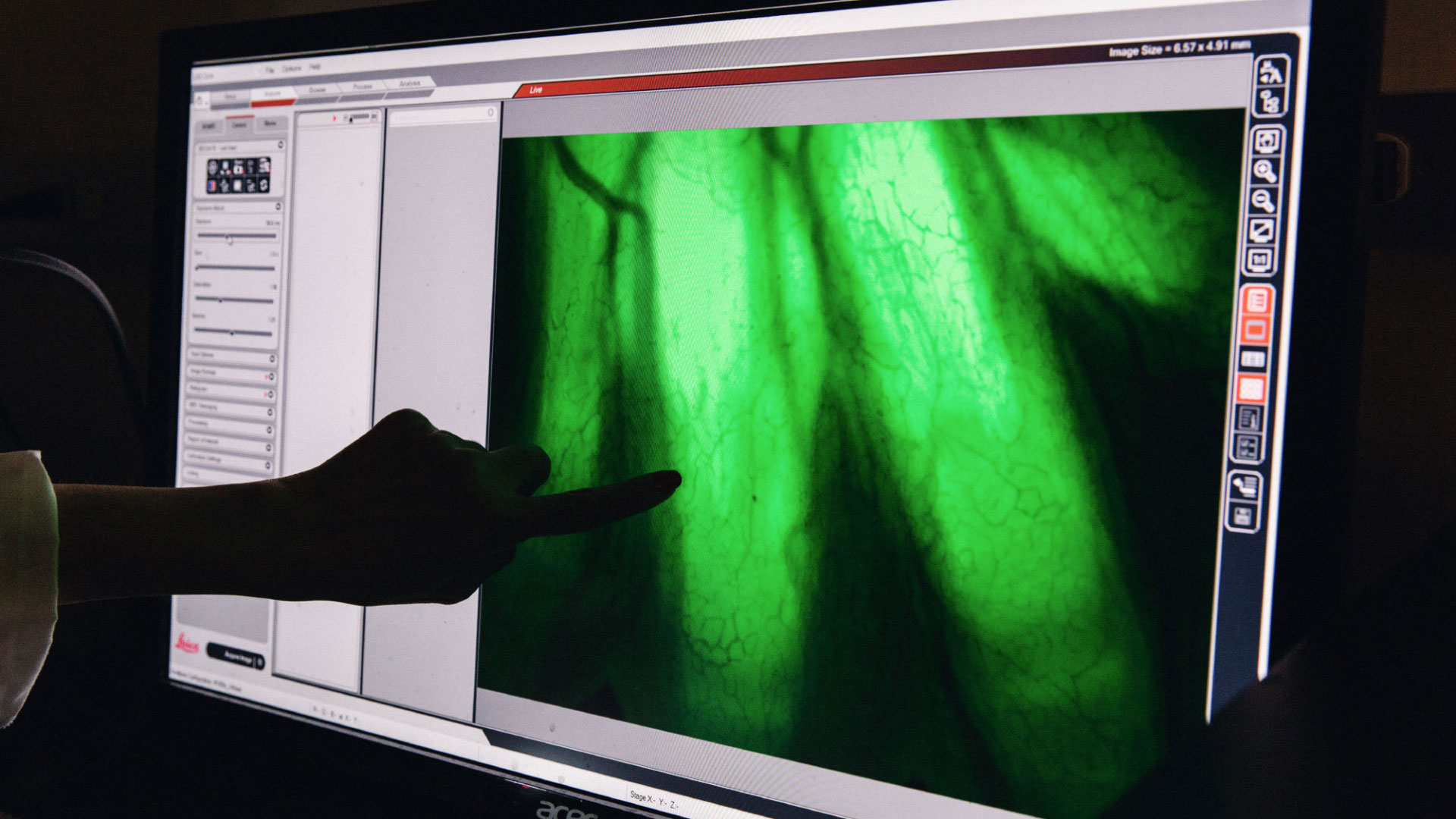
Jessica Whited on Limb Regeneration and the Axolotl Genome
Jessica Whited is a biologist who studies limb regeneration at Harvard Medical School and Brigham and Women’s Hospital. Here, she explains how genomic information for the salamander called an axolotl will help us understand the potential for regrowing limbs in humans and other animals.

Carina Curto on How Physicists Can Think About Neuroscience
Carina Curto, a mathematician at Pennsylvania State University, explains how her background in theoretical physics helps her tackle daunting problems in theoretical neuroscience.

Lisa Manning on the Dynamics of Glasses and Embryos
Lisa Manning, a physicist at Syracuse University, describes how the physics of glassy materials helps to explain how some organs assume their correct shape during embryonic development.

Michela Massimi: Defending the Philosophy of Science
Michela Massimi argues that the philosophy of science doesn’t have to be useful to scientists for it to be useful to humanity.

Donald Richards: A Revealer of Secrets in the Data of Life and the Universe
Donald Richards discusses the statistical rule-of-thumb he wishes everyone knew.